Association
Factory No 3
In the summer of 1915, the people of Newburyport funded this building themselves — $5 a month, one share at a time — to bring work to their city. This is the story of everything that followed.
A factory built by subscription — three days, 160 shares, and a promise of manufacturing jobs for the city.
In March 1908, a group of local businessmen formed the Newburyport Building Association with a single purpose: raise money, build factories, and bring industry to Newburyport. They sold shares to anyone — merchants and mill hands alike — and the buyers were known simply as subscribers.
On July 27, 1915, the Association proposed its third factory. A tenant was already waiting: Levirs & Sargent, a shoe manufacturer from Lynn, promising work for 250 people. The next morning, a committee fanned out to canvas the city.
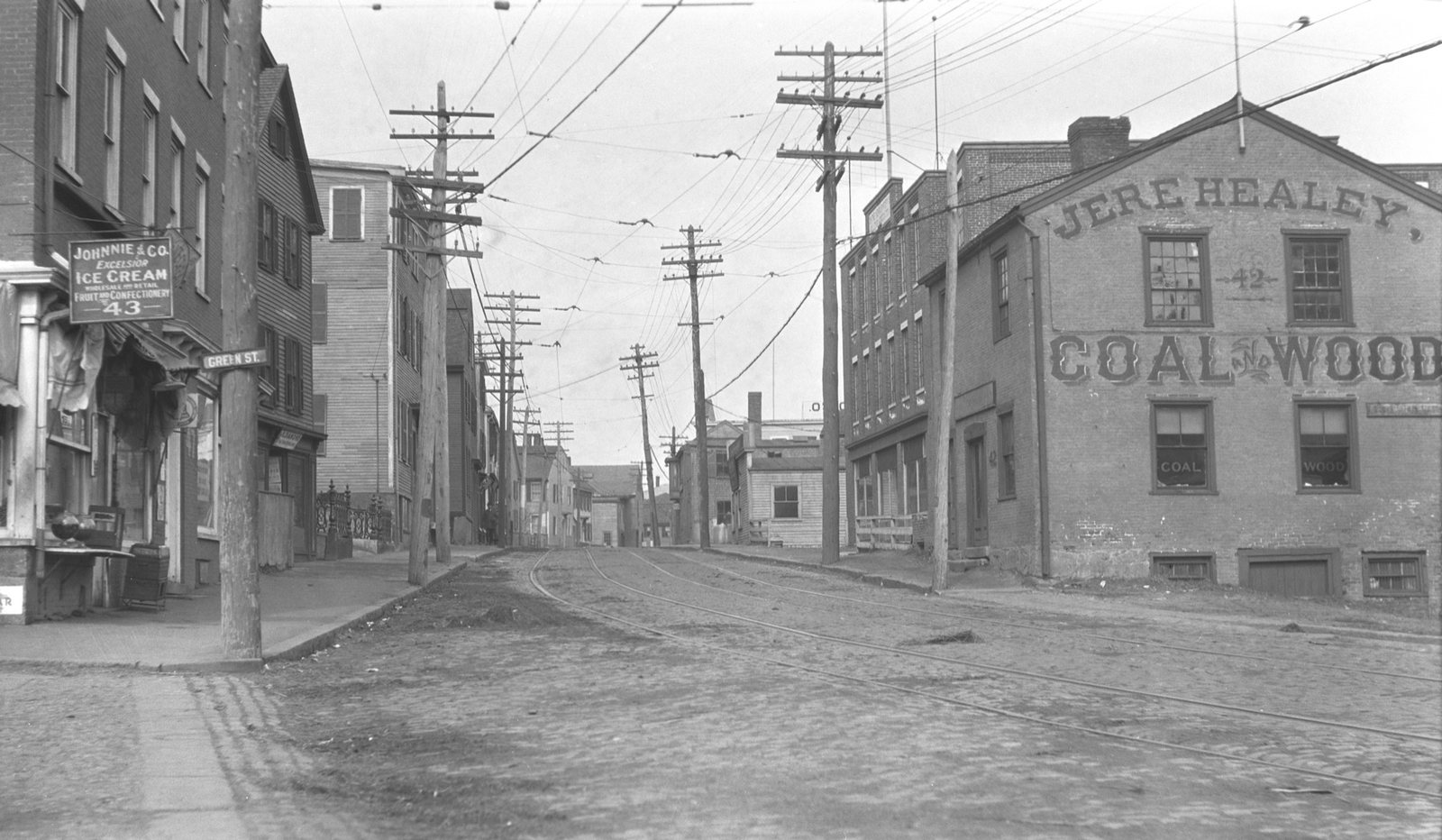
By July 30 — three days later — all 160 shares were sold, and enthusiasm ran so high the selling kept going past the goal. The tenant chose the lot at the bottom of Green Street: 44 Merrimac Street.
- Jul 27, 1915
Factory No. 3 proposed; Levirs & Sargent secured as tenant.
- Jul 29, 1915
The campaign opens: 160 shares to sell, a $100,000-a-year payroll promised.
- Jul 30, 1915
Subscriptions pour in — shop windows post the running tally of shares.
- Aug 9, 1915
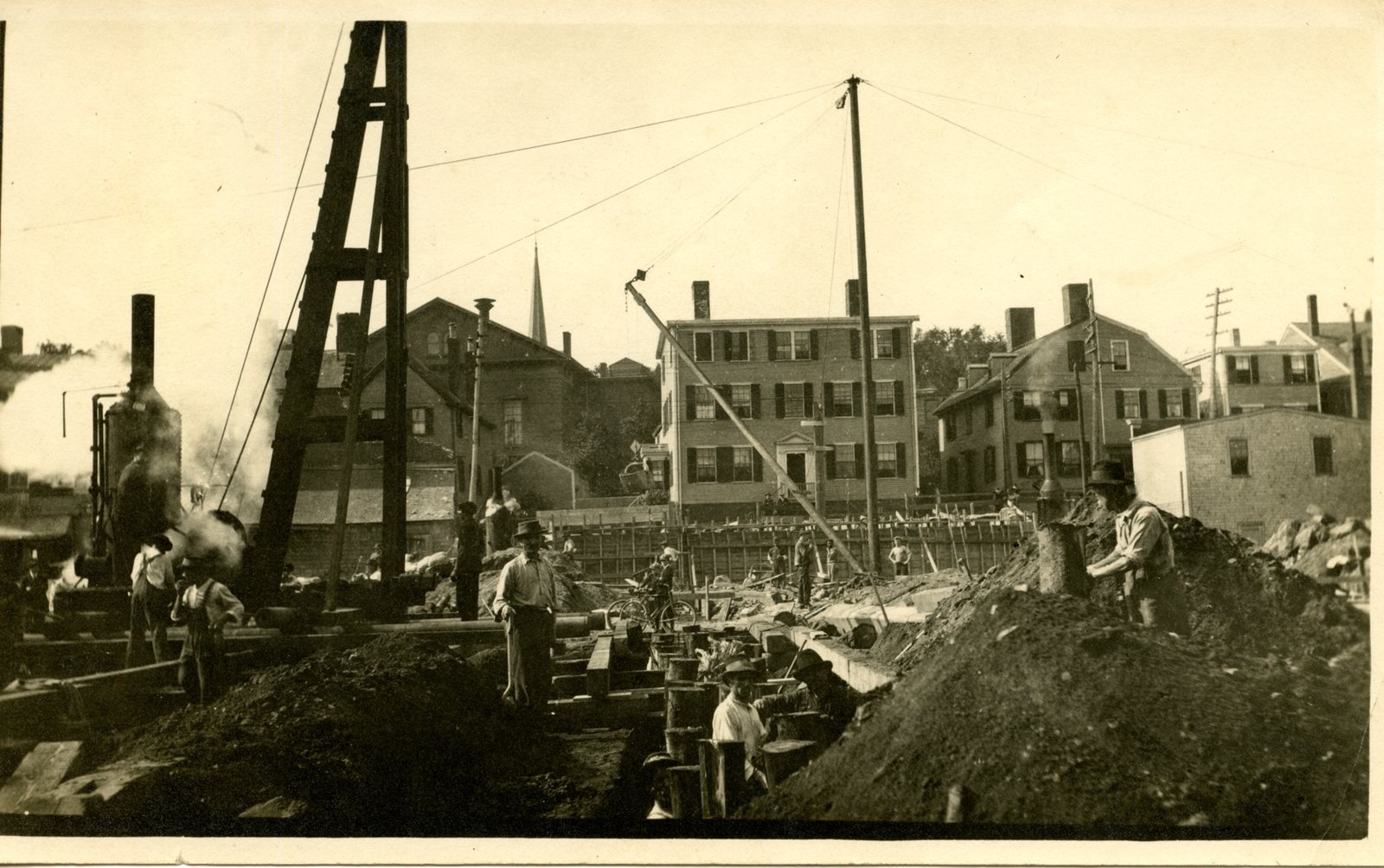
Construction begins at 44 Merrimac Street — papers signed with Levirs & Sargent two days before.
- Oct 7, 1915
Mid-construction, the tenant asks for a fourth story. They get it.
- Nov 11, 1915
The iron window frames arrive; roof work starts at the easterly corner.
- Dec 9, 1915
First floor ready for occupancy — ahead of schedule, four months after ground was broken.
- Jan 25, 1916
The cutters start work — 137 machines being set up, local shoe workers given preference.
Three hundred at the banquet — and the first shoes ship out.
On Monday, January 10, 1916, the new factory was dedicated the only way that felt right — a banquet on the street-level floor, tickets $1.50 a plate. Over 300 people attended, with notable speakers of the era, long spreads catered by Schlehuber of Lynn, and a full orchestra playing for the crowd.
Confidence ran so high that fundraising for Association Factory No. 4 — an extension of the N.D. Dodge Shoe Co. on Prince Place — began that very night, in this building.
Two months later, a Daily News journalist touring the plant watched the first lots of finished shoes being readied for shipment around the country.
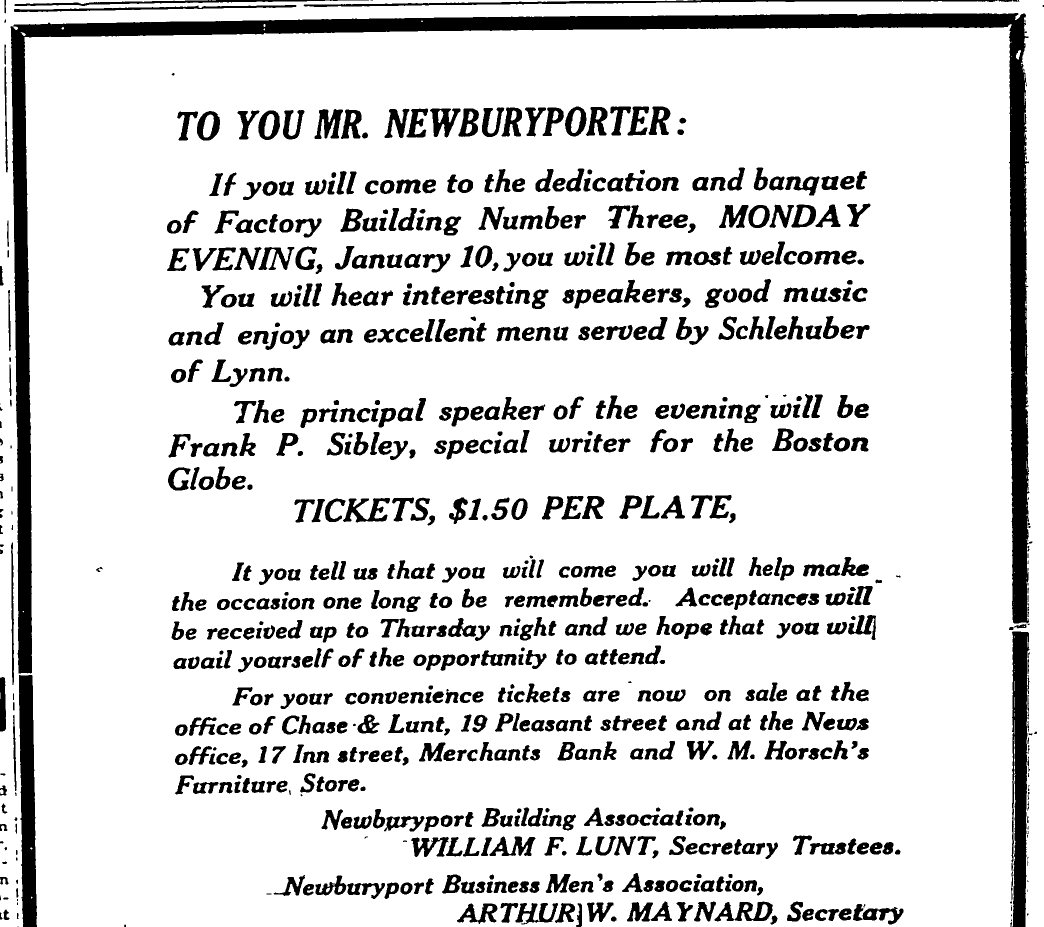
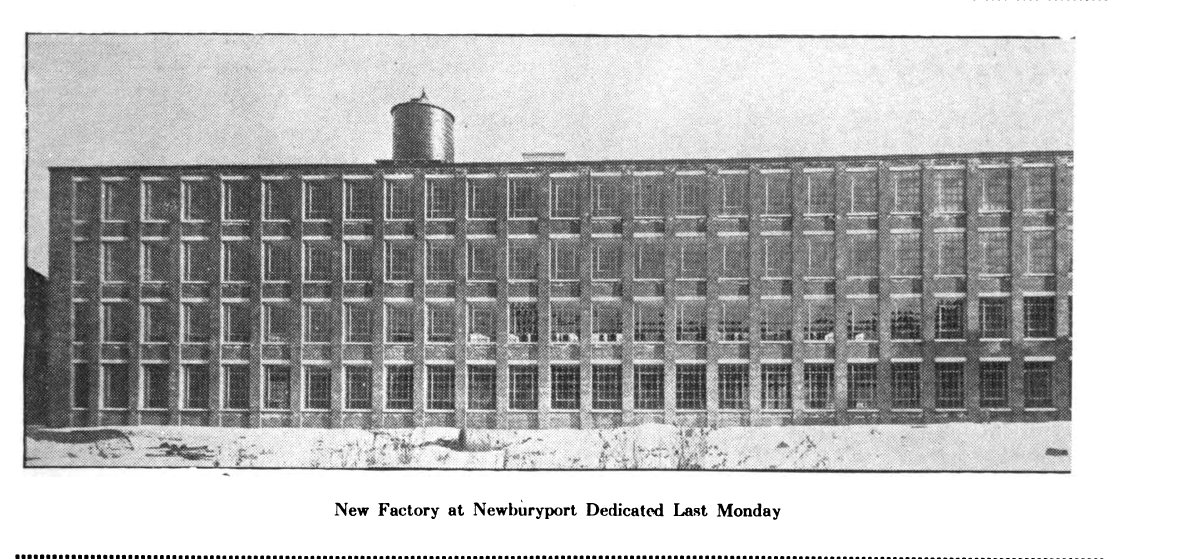
a model shoe factory— The Newburyport Daily News, touring the building · March 10, 1916
The early years — Sears comes and goes; Three Line Counter Co. runs 150,000 pairs a day.
The first tenant didn't last — by late 1916, Levirs & Sargent was out of business. But the building never wanted for suitors. What followed was the rhythm this place would repeat for a century: a tenant outgrows it, another moves in, and the building keeps working.
Sears, Roebuck & Co.
On January 22, 1917, the retail giant bought Factory No. 3 outright and retooled it to produce 3,000 pairs of shoes a day. Within four months they had outgrown the entire building — and left, keeping it as their property.
Three Line Counter Co.
A New Hampshire manufacturer leased the building from Sears on May 12, 1917, producing fiber shoe counters — the stiff insert built into a shoe's heel that gives it structure and holds its shape — at an astonishing rate before moving north in the early 1930s.
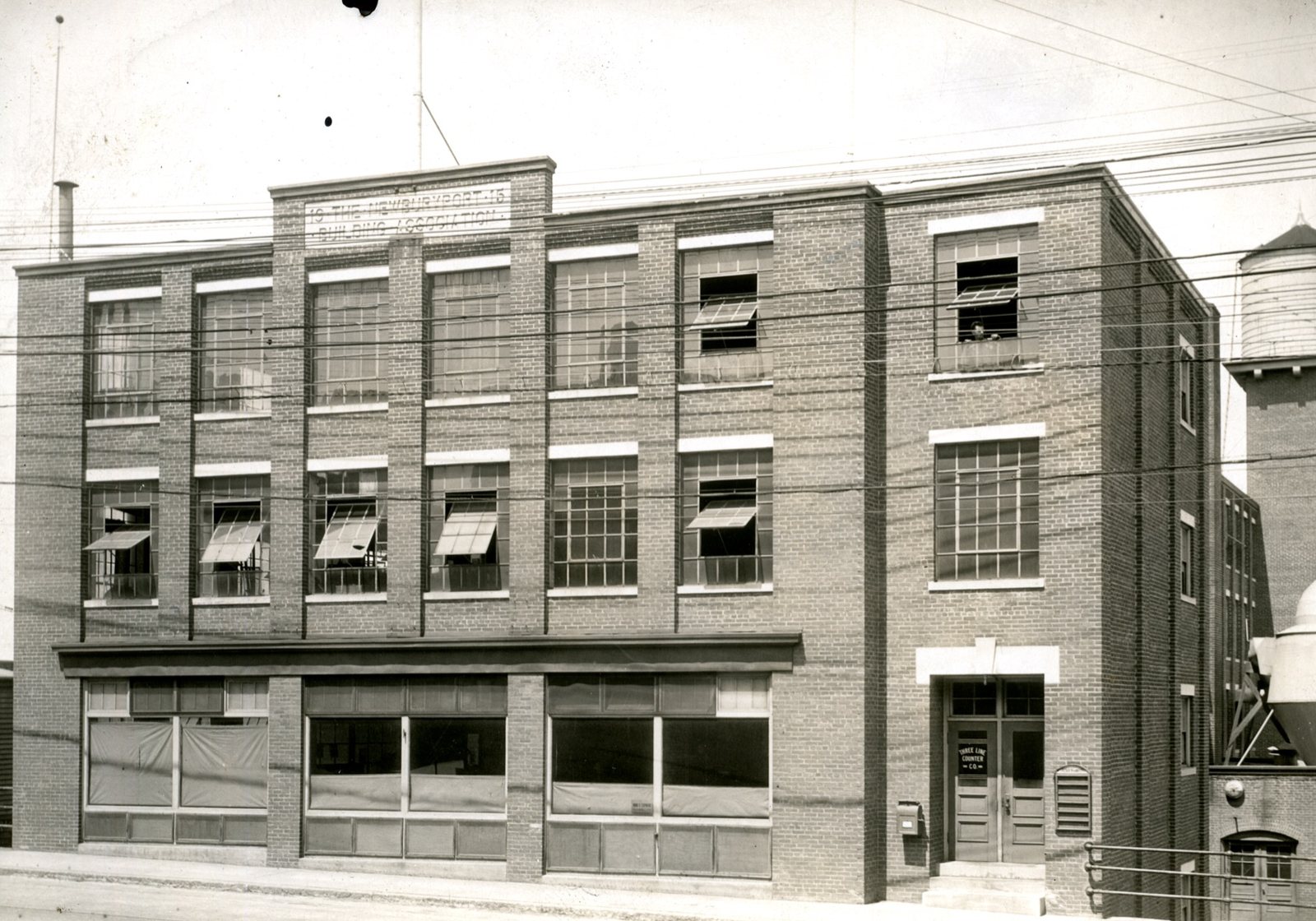
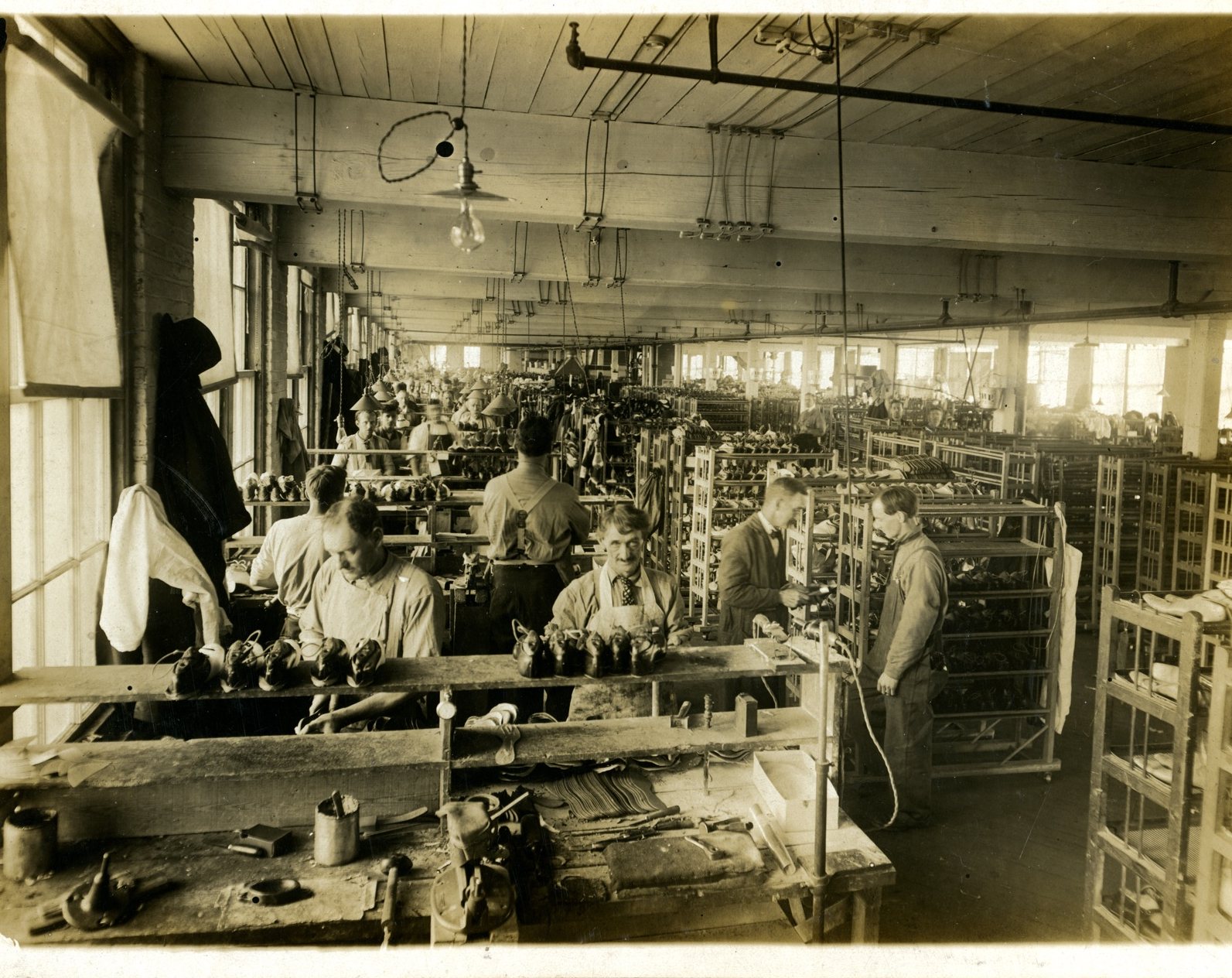
When Three Line Counter left, the building passed briefly to a trust at auction, sat quiet for a spell — and by 1934 was back in the hands of the Newburyport Building Association. Just in time for the worst day in the neighborhood's history.
The Million
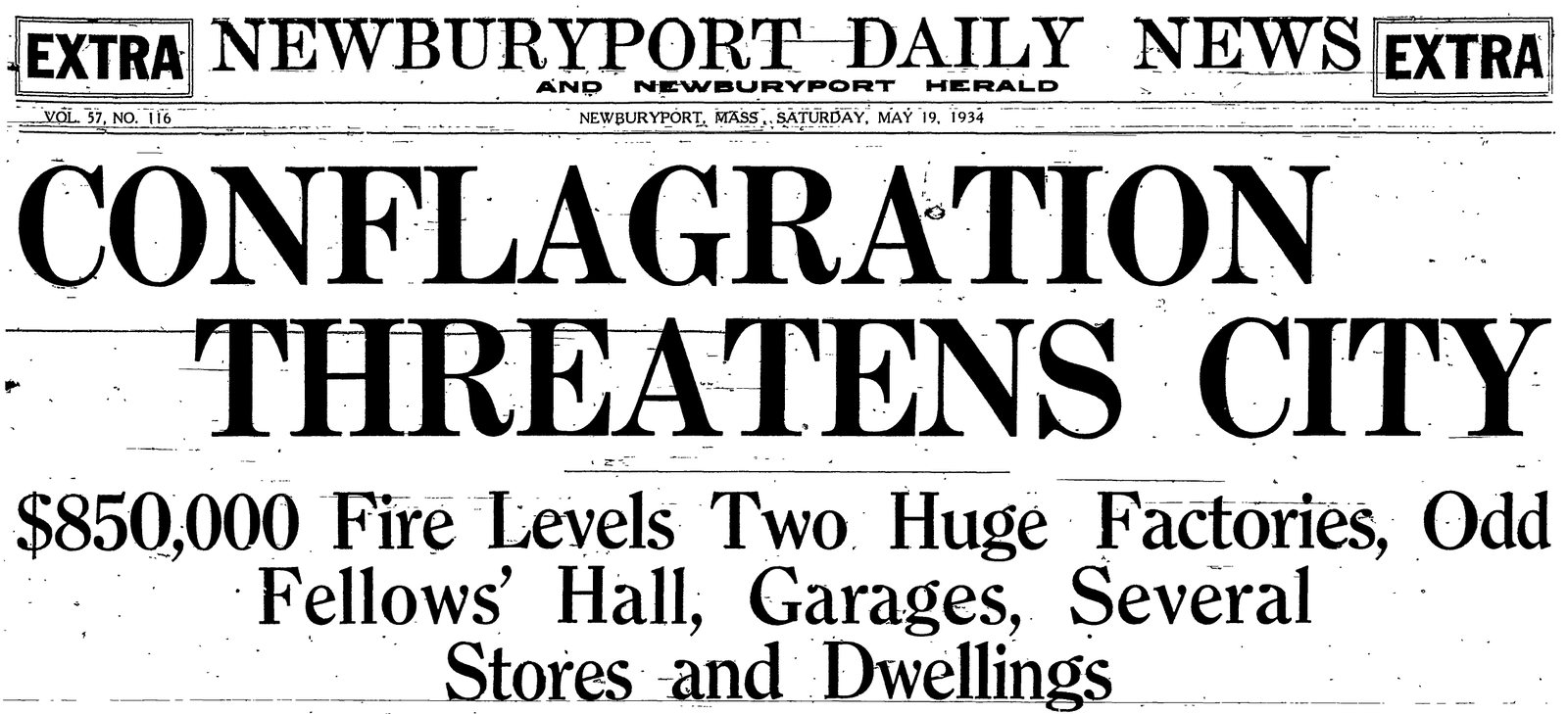
Dollar Fire
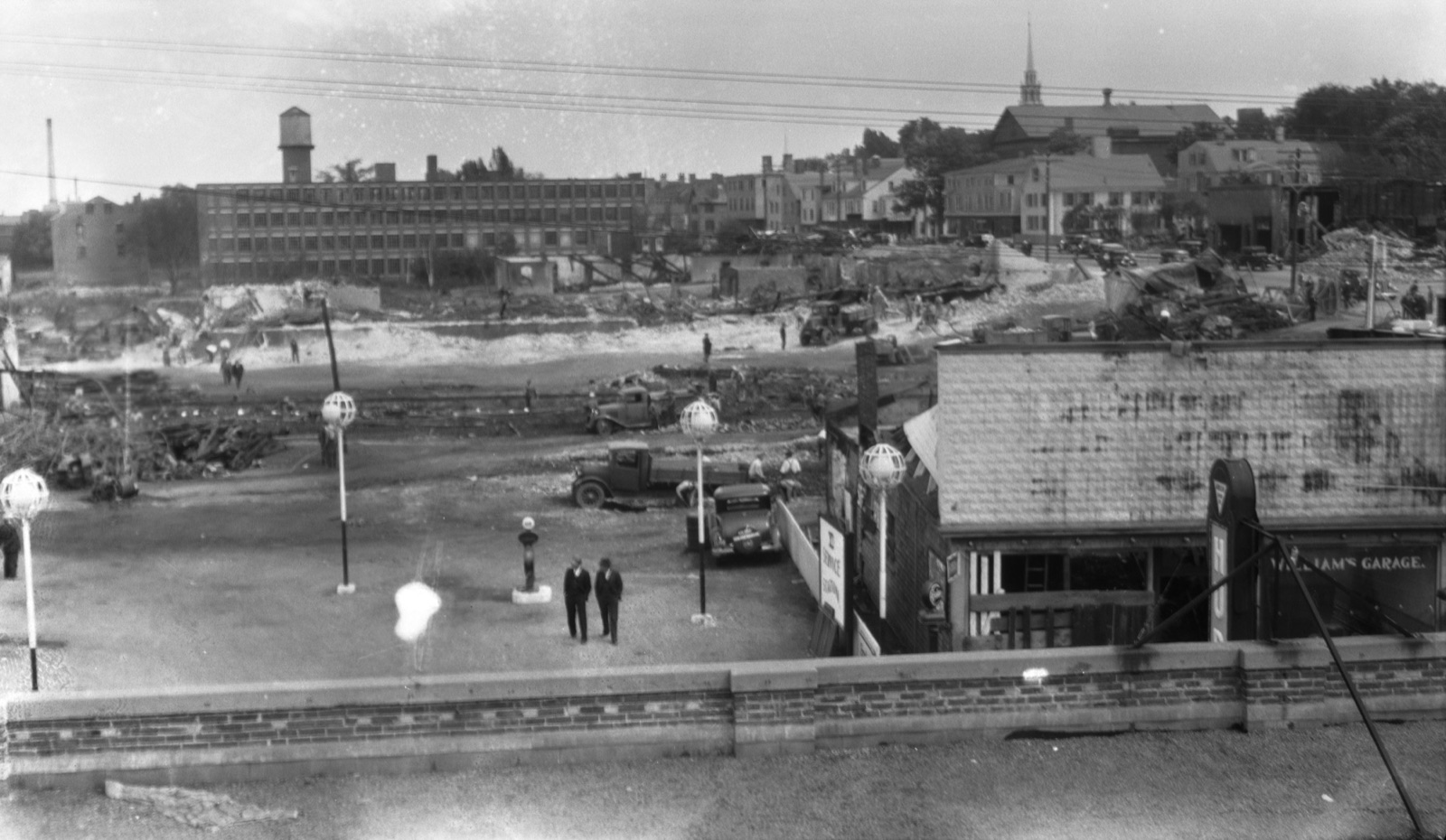
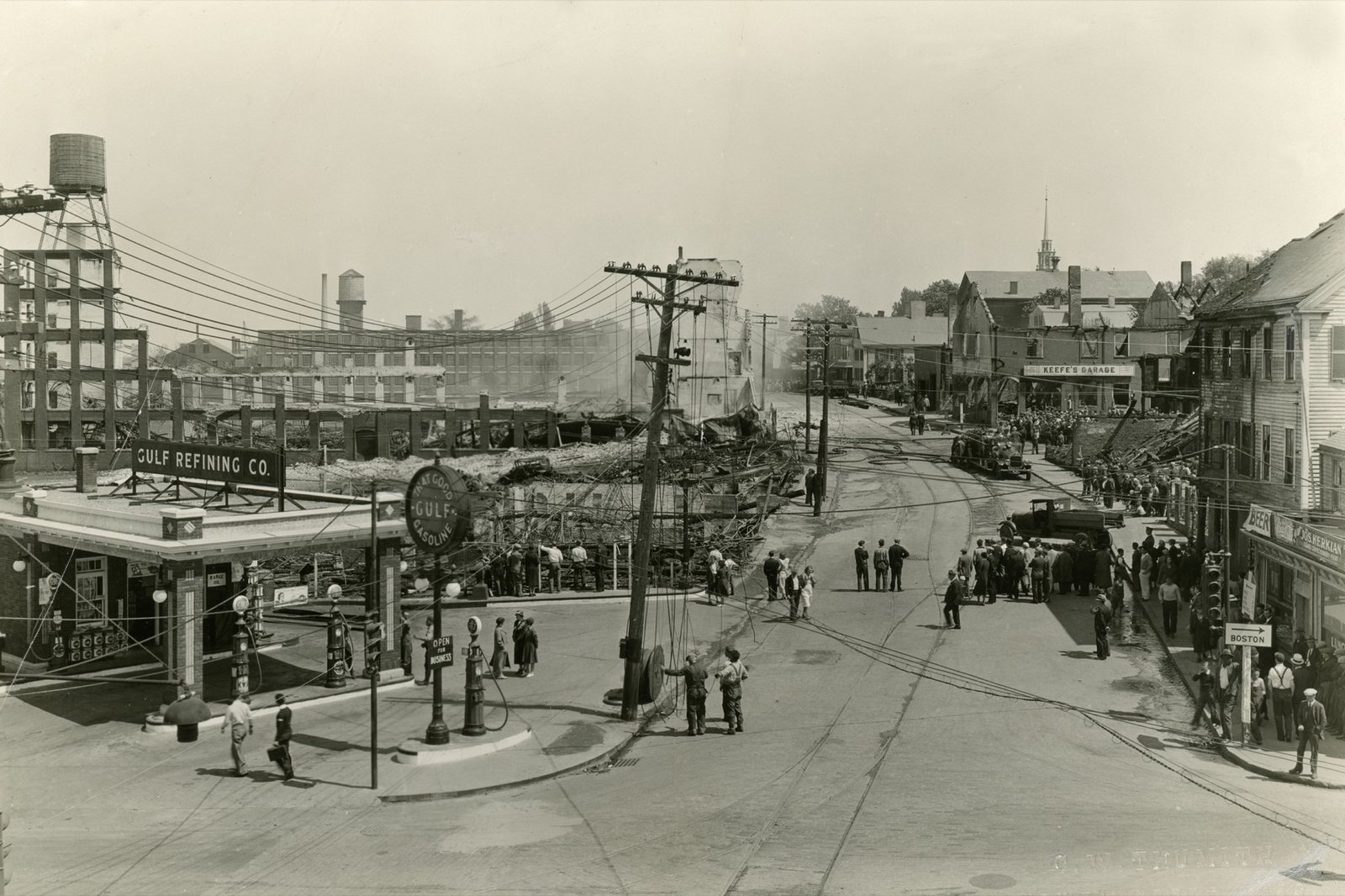
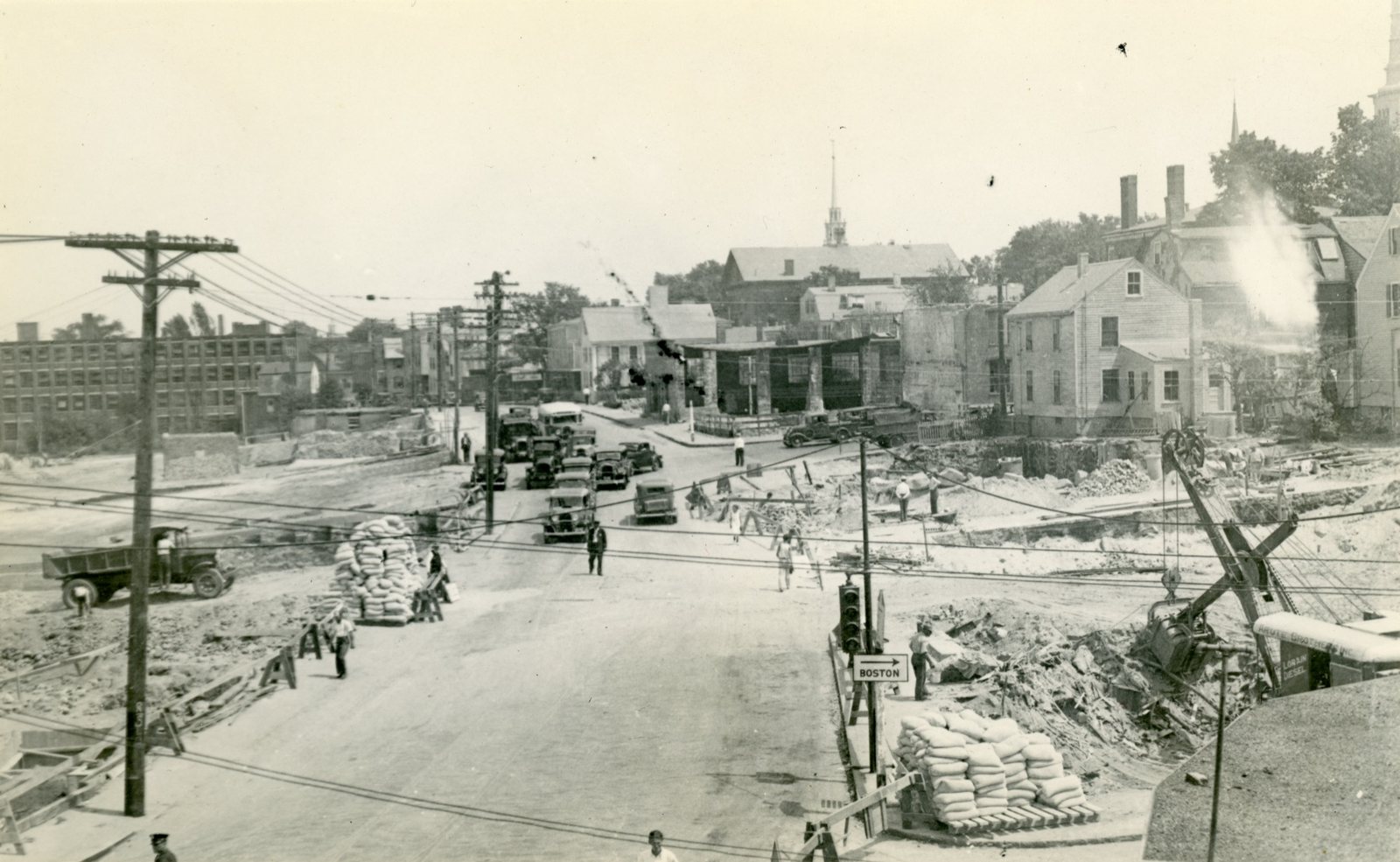
It broke out at the Dodge Bros. Shoe Company at Route 1 and Merrimac Street, and it did not stop. Nearly every building between Route 1 and 44 Merrimac Street burned — including the George A. Learned building next door, a sister Association factory, lost with the Fisher Shoe Company inside it.
The fire line stopped at these walls. Two weeks later, the Association fitted the building up for the burned-out Fisher Shoe Company — the neighborhood's recovery began in this building.
The Ruth Shoe era — 650 workers, and the last major shoe factory standing in Newburyport.
Fisher Shoe's stay was stormy — walkouts, lockouts, and picket lines every couple of months until they left for Jamaica Plain in late 1935 (where, it must be said, the labor trouble followed them). The building sat quiet from 1936 to 1938.
Then came the name Newburyport still remembers. In September 1938, the Ruth Shoe Company of Salisbury bought the building — still described, twenty-three years after it was built, as "the best-laid-out modern industrial plant in New England." The City of Newburyport helped fund improvements through its Local Industrial Fund to win them over; cities fought for factories in those days.
Ruth Shoe arrived with 450 employees and grew to 650. They held on through the long collapse of the New England shoe industry — taking the names Mark Alan Shoes and Port Shoe Company along the way — and were the last major shoe factory in the city — only a couple of very small concerns remained — when bankruptcy finally came in 1963.
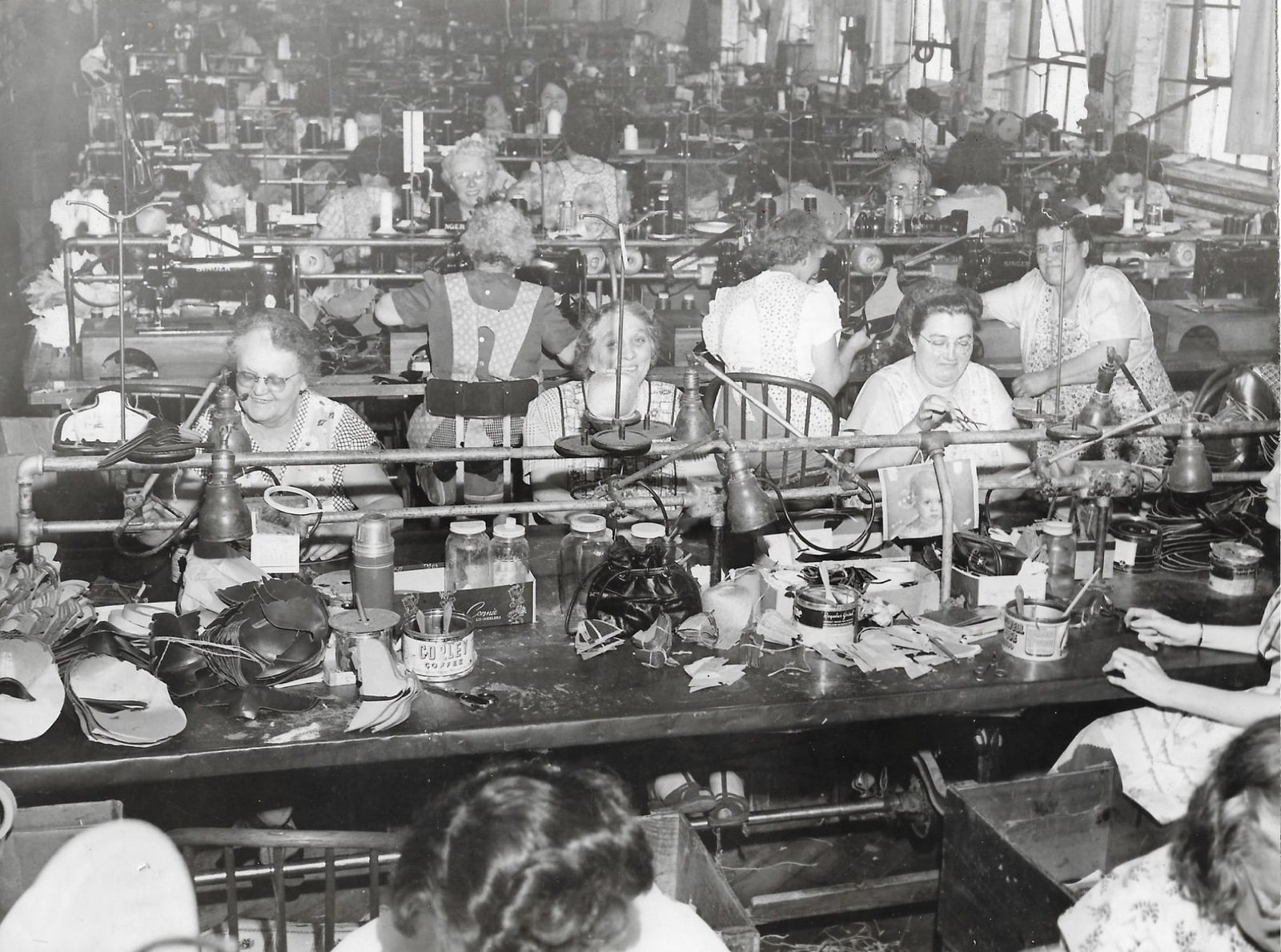
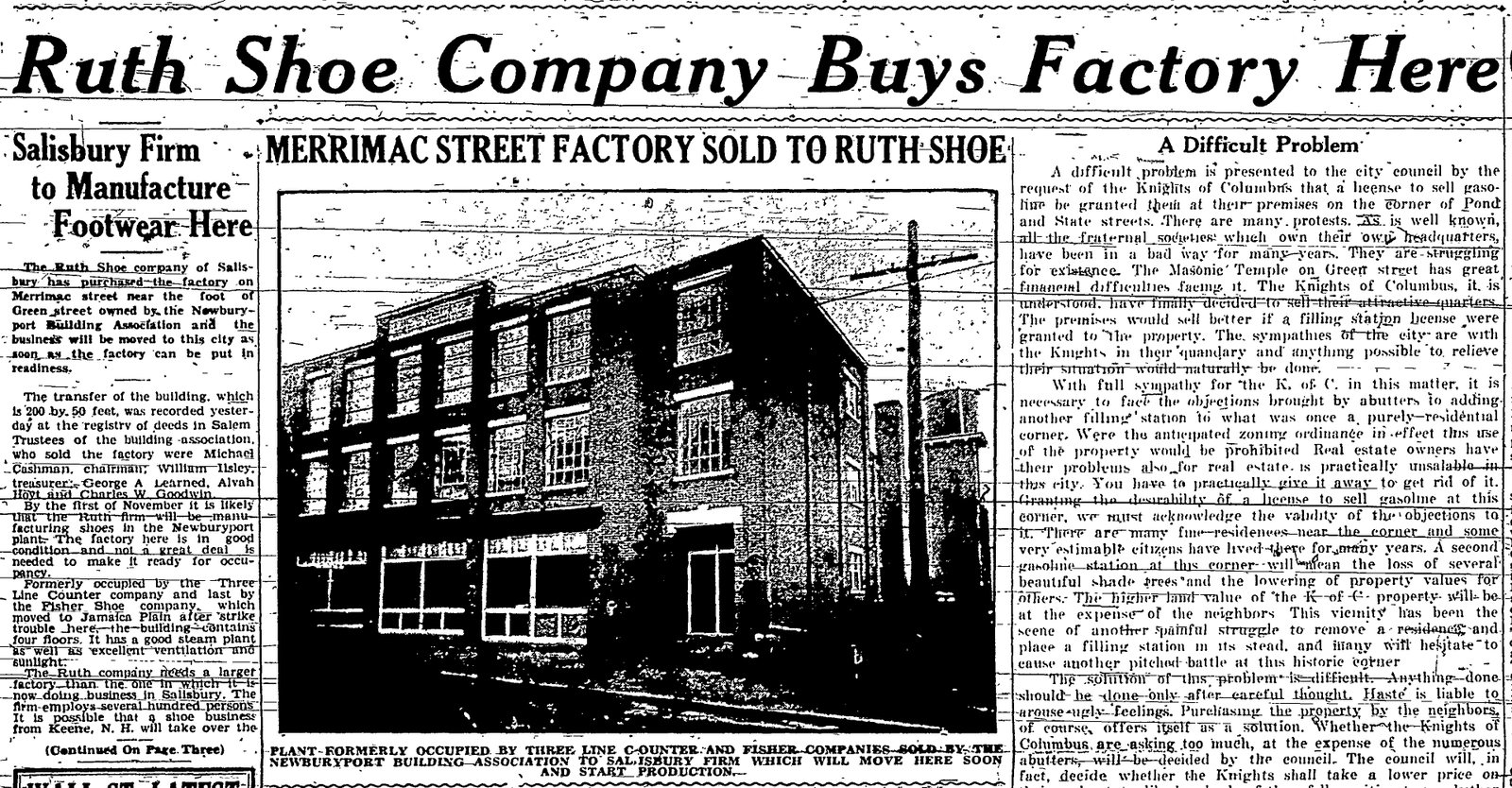
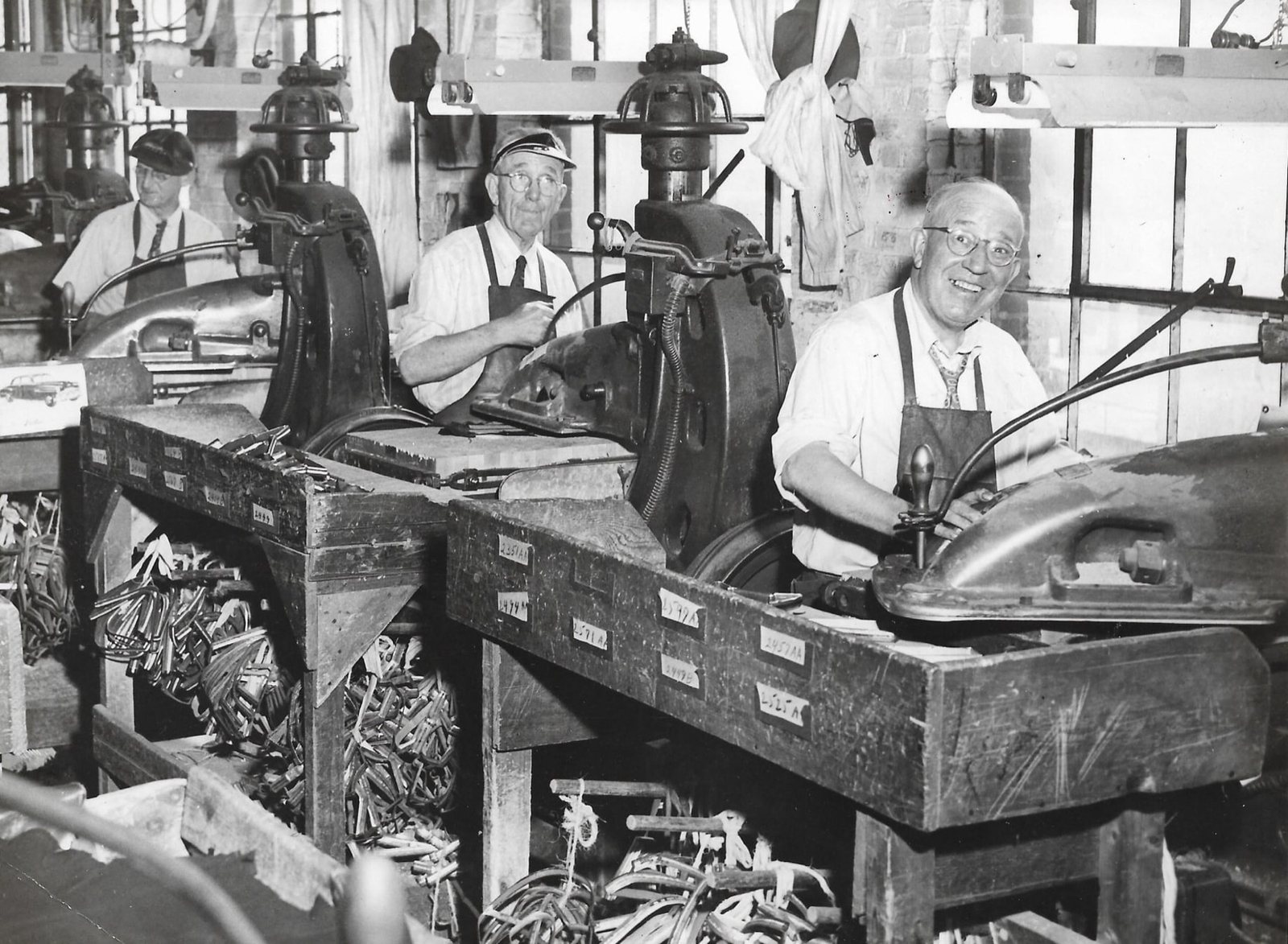
In January 1964, the Small Business Administration repossessed the building. The shoe era — 48 years of it — was over. What happened next still hasn't ended.
The Geonautics era — Henry Tracy, marine and aerospace manufacturing, and six decades of one family.
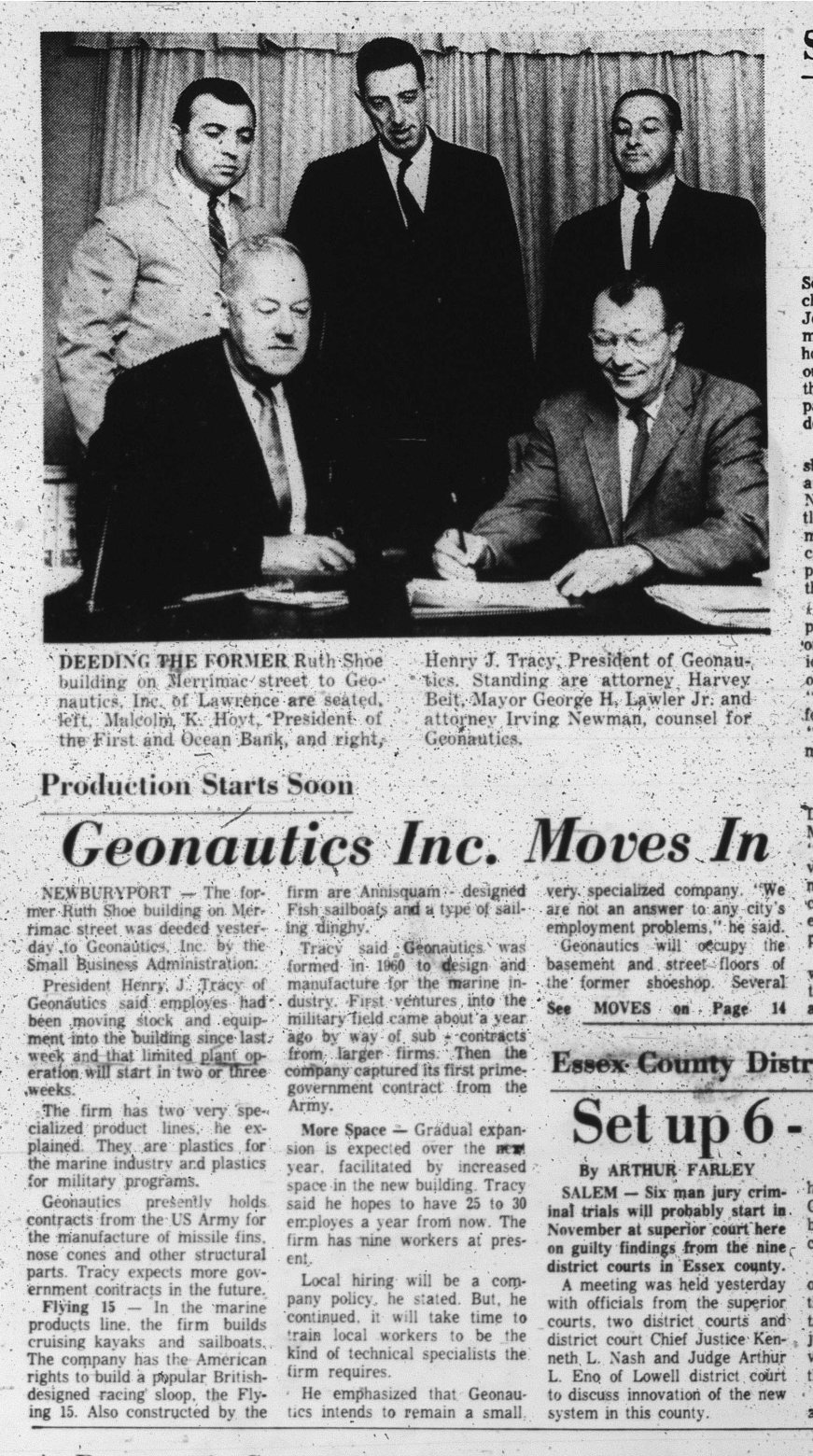
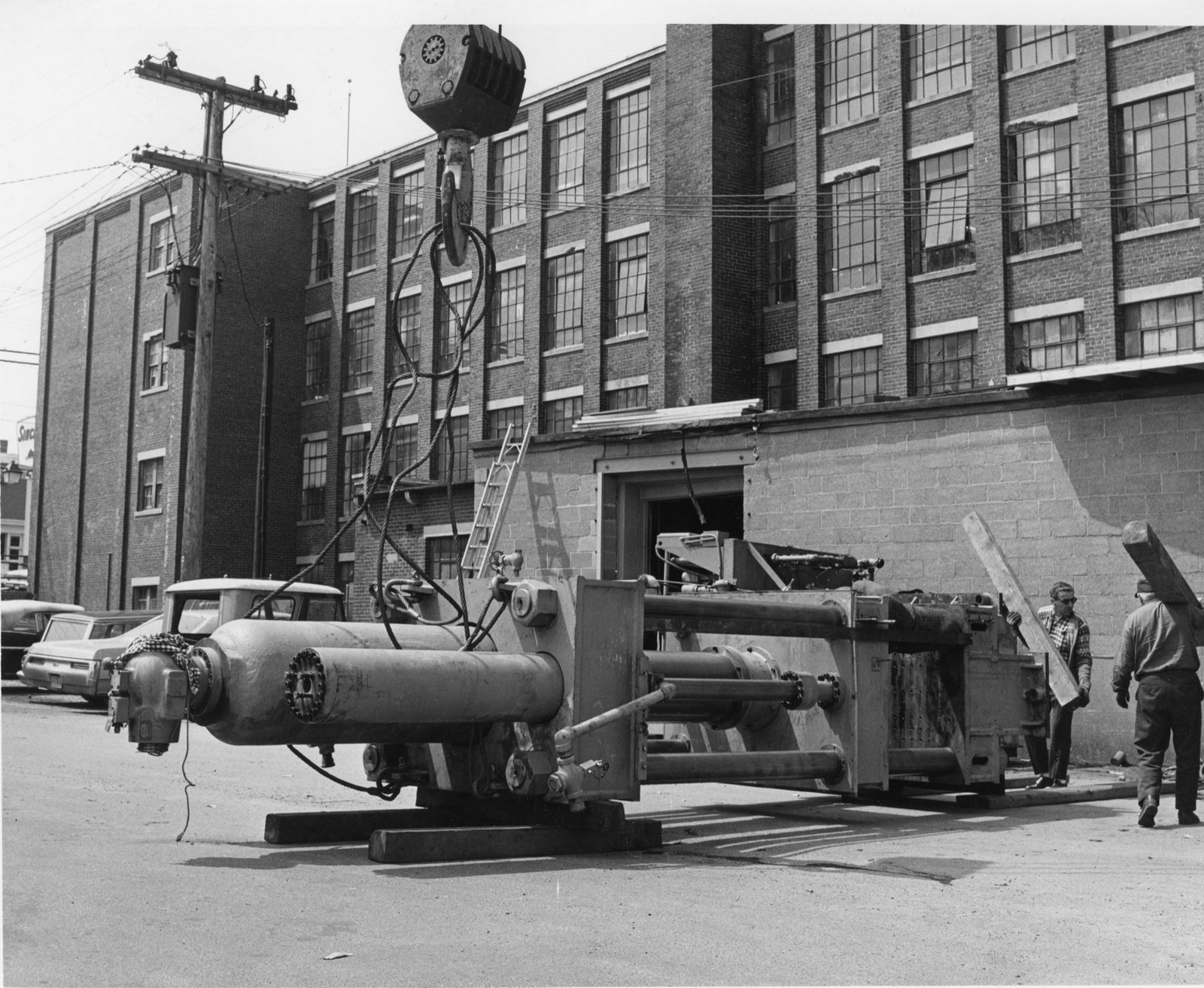
On August 19, 1964, an engineer named Henry Tracy bought 44 Merrimac Street from the Small Business Administration. His company, Geonautics, developed and produced reinforced composites for marine and aerospace applications — and the old shoe factory became a quiet corner of advanced manufacturing in America.
It was the building's final industrial act, and its reach was wide: the PASGT ballistic helmet developed for the U.S. Army, rocket nozzles for various missile systems, the lens and backing for the F-14's Low Lumen lighting, and fiberglass offshore navigational buoys for the USCG riding the shipping lanes off New England — plus countless technical aerospace R&D projects in between. Even the Arborlite eagle plaques that are still seen hanging on homes across the region were made here.
Henry Tracy was the first generation of the family that owns the building to this day — the longest continuous stewardship in the building's storied history.
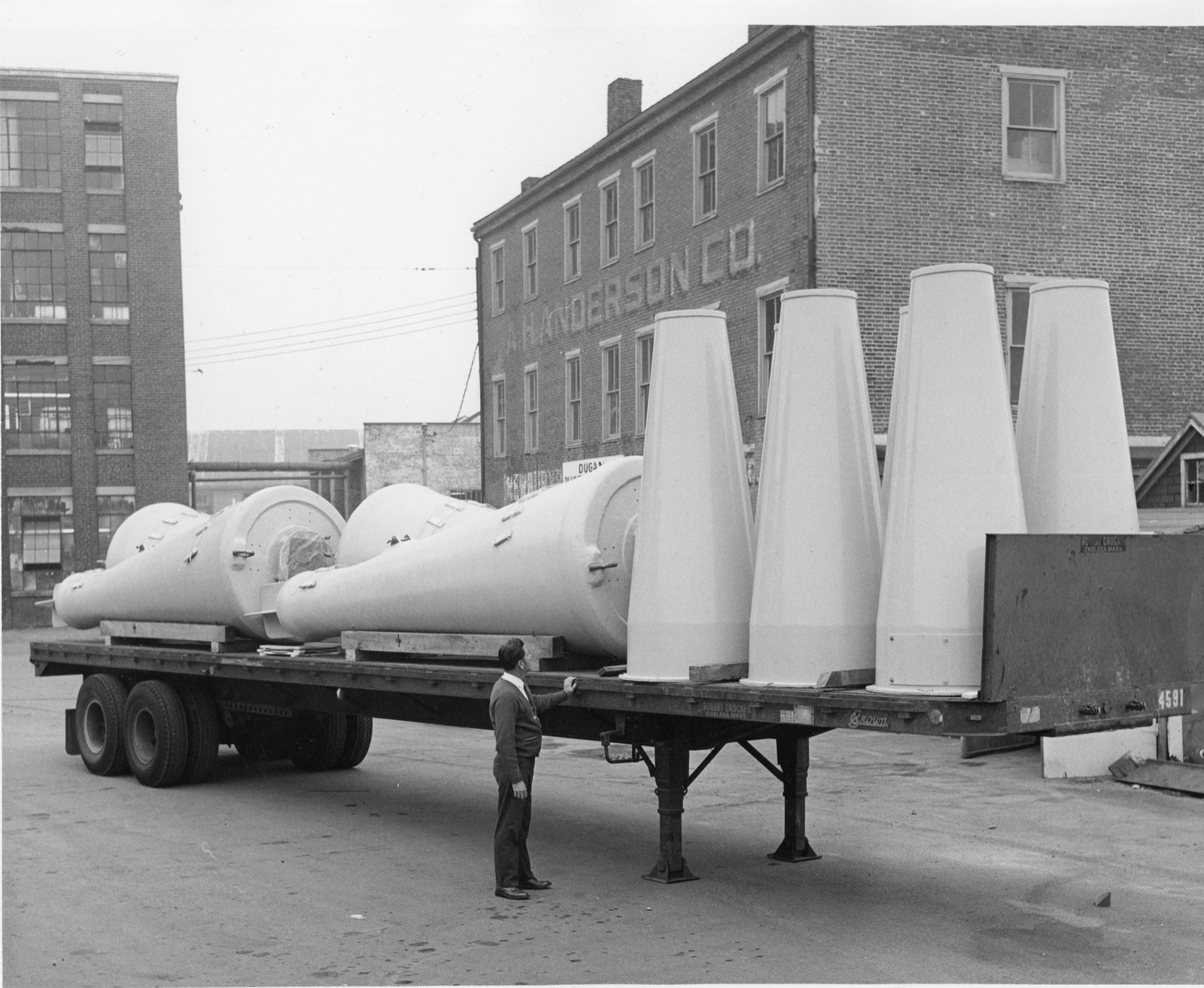
Janet Tracy's vision — an empty mill becomes a working address, tenant by tenant.
By the late 1970s Geonautics had outgrown the building and moved on, though the family held onto it. It sat empty once more. Then, around 1980, still in the era of Newburyport's urban renewal, Janet Tracy went to work on a simple idea: the old factory didn't have to be a relic of a time long past — it could hold a thriving community of businesses, the next modern iteration of the work and commerce it was built to bring to the city.
She secured a large tenant for the entire top floor and began renovating. There was no master plan financed overnight — the renovation took more than two decades, completed tenant by tenant, floor by floor, as the building slowly filled with a new kind of work.
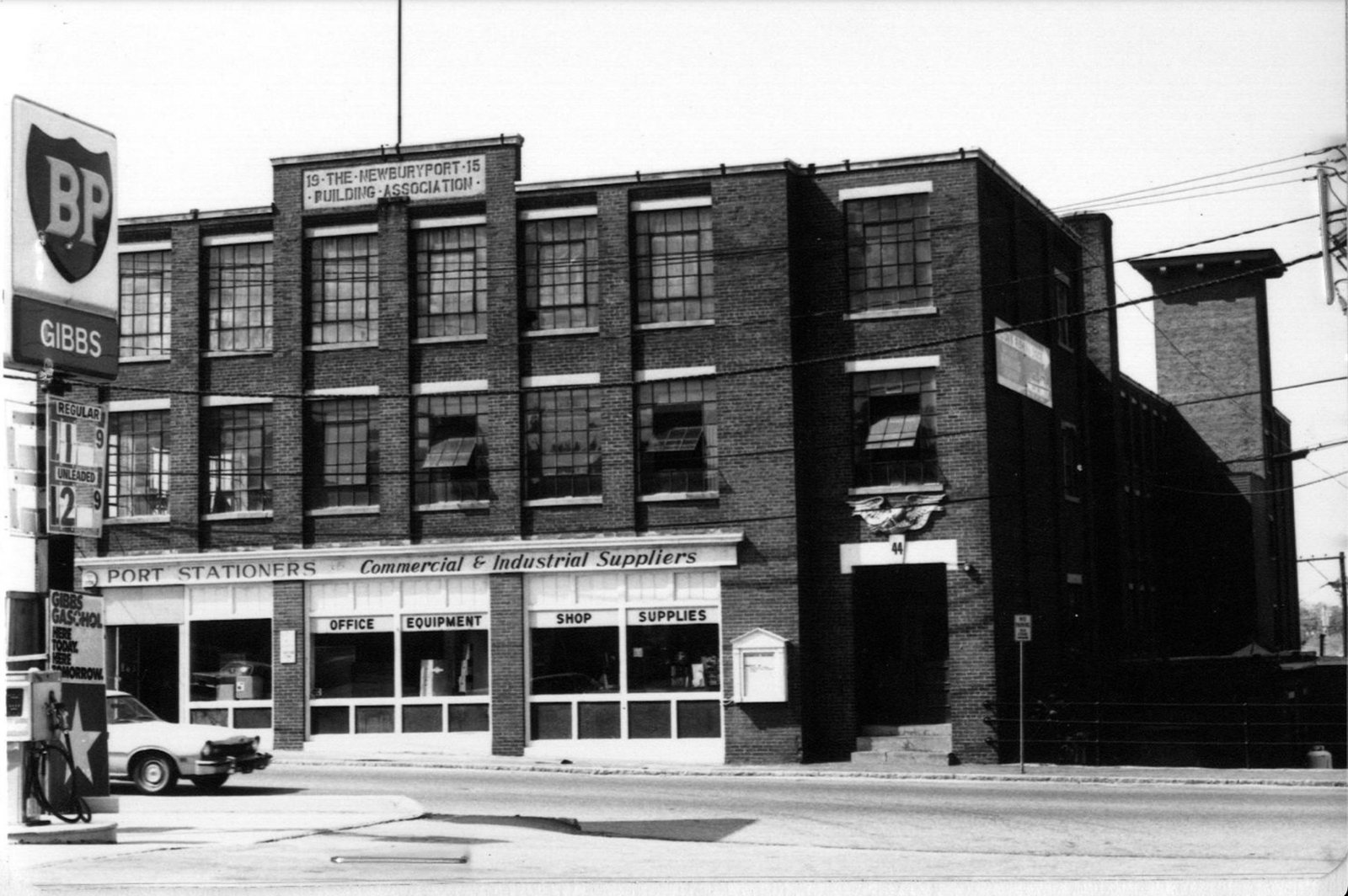
The Massachusetts Historical Commission recorded the building in 1980, just as its second life was beginning.
That second life is still running. More than four decades on, office space is now the longest single use in the building's history — longer than the shoe years, longer than manufacturing.
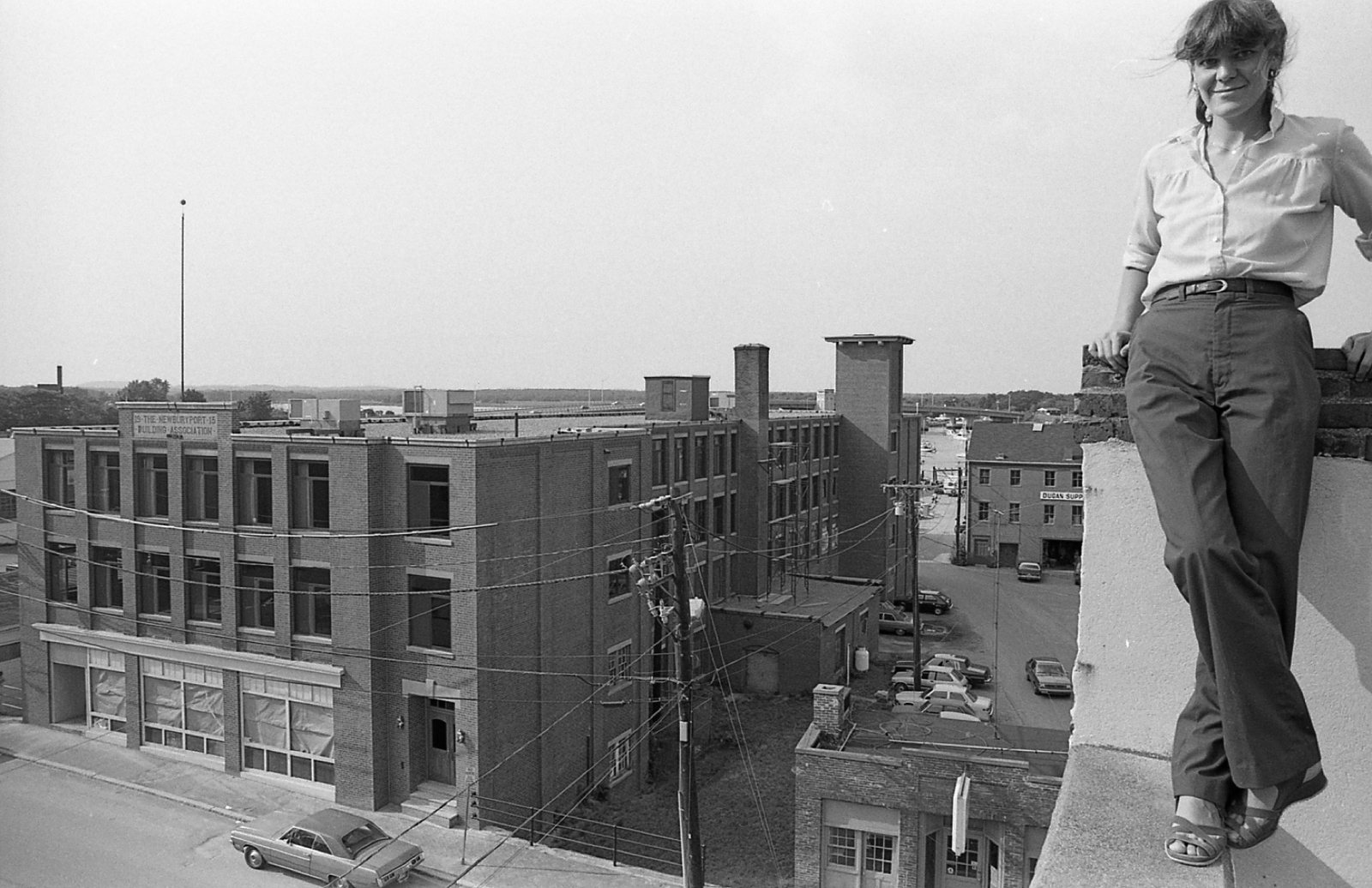
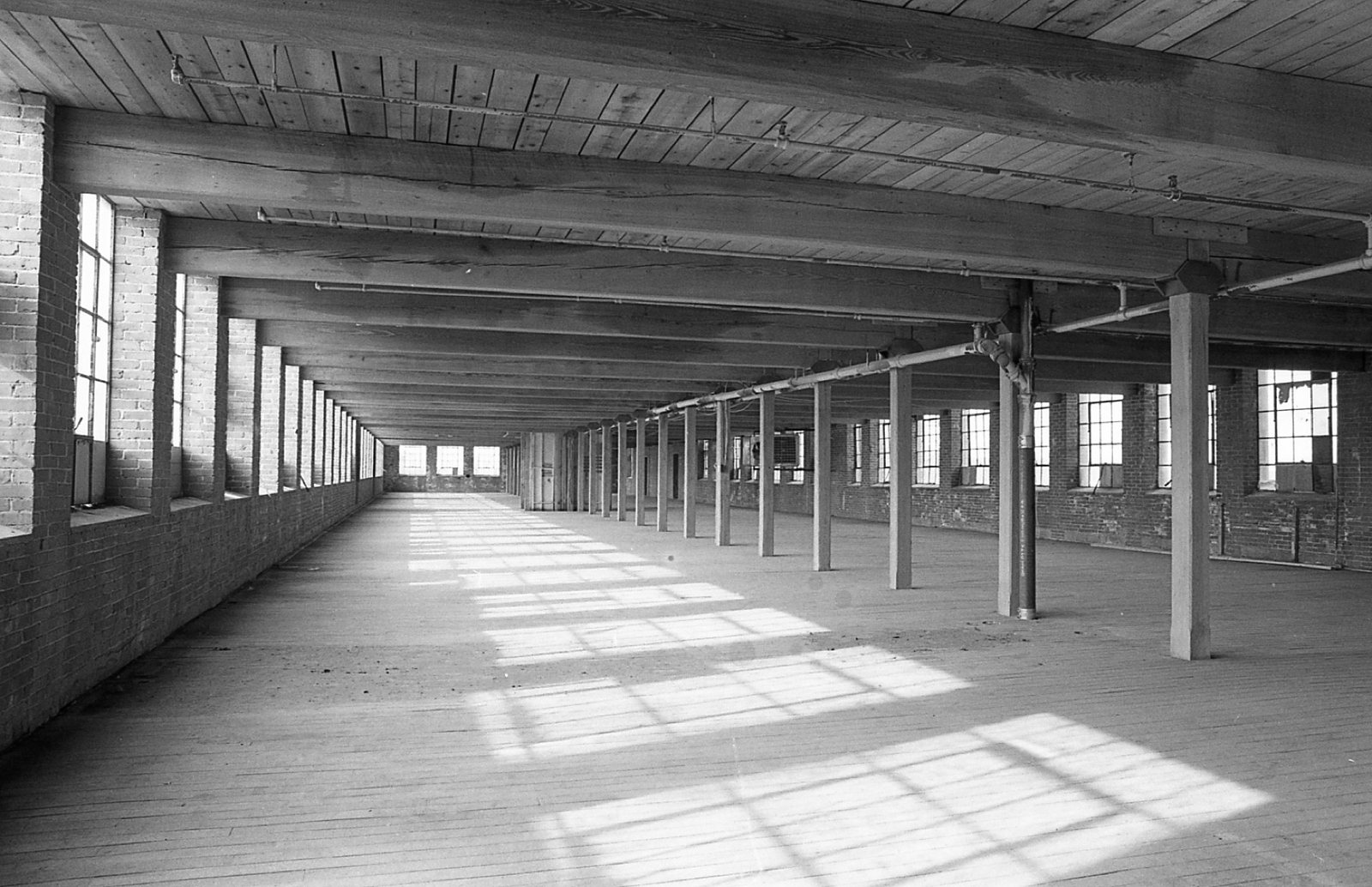
People look out our windows and all I can tell them about is the future.— Janet Tracy · The Daily News, early 1980s
Still doing
its original job
Association Factory No. 3 was built by community investment to bring industry, jobs, and commerce to Newburyport. Over a century later — now the Merrimac Mill Office Building — it houses more than 50 businesses employing over 250 local people. Different tools, same purpose.
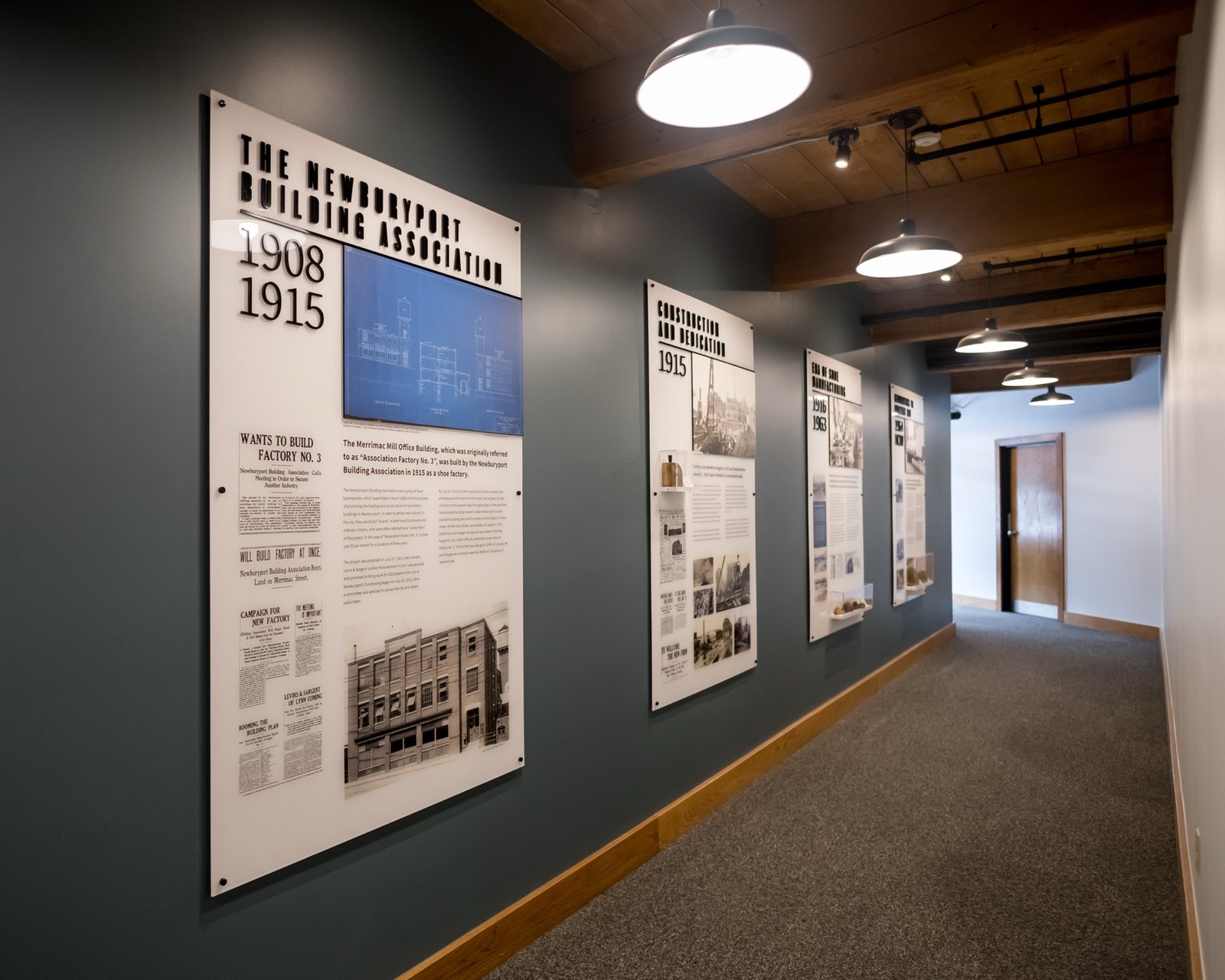
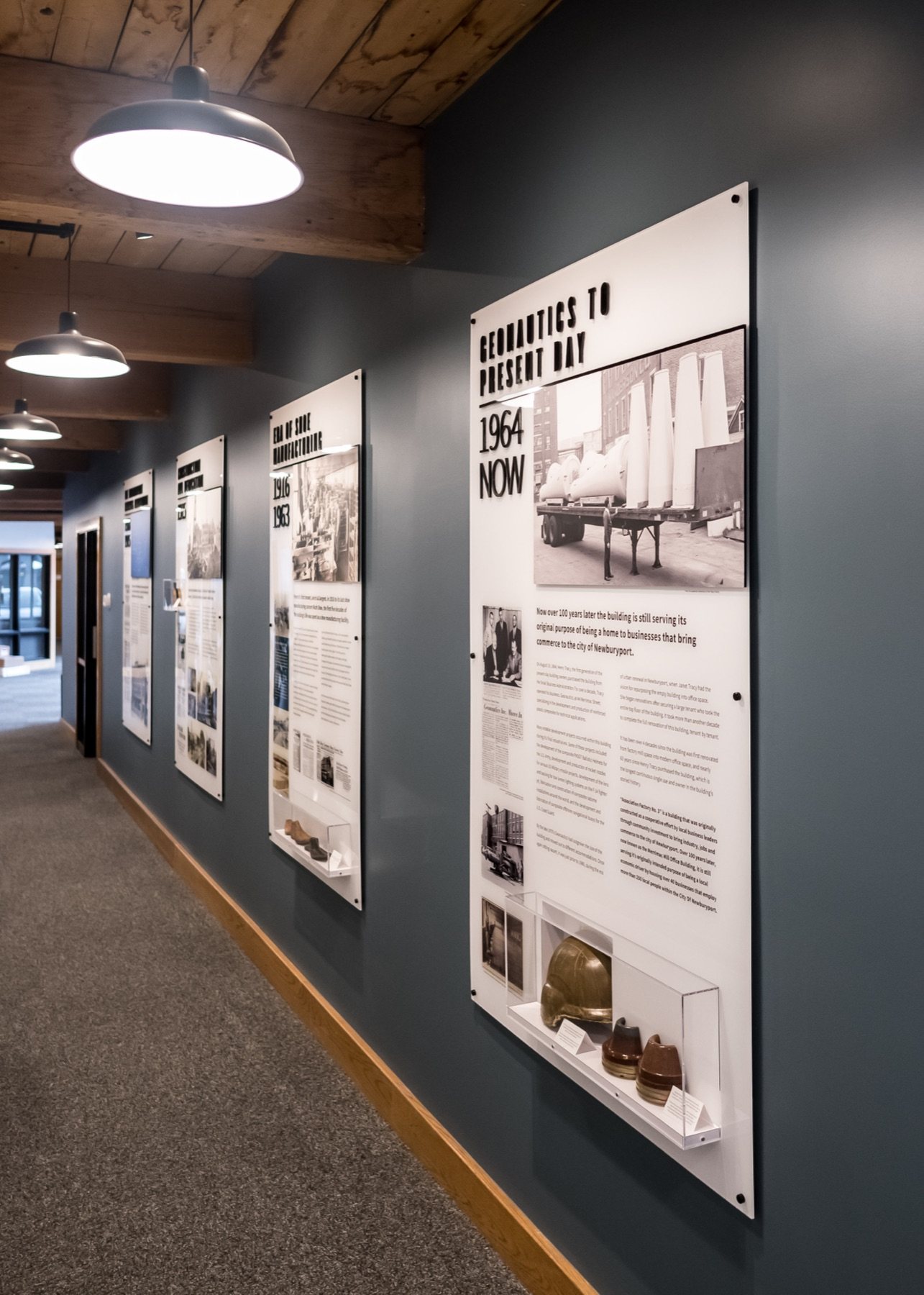
Touring the building? Be sure to walk the historic timeline in our lobby — original photographs and artifacts from every era on this page. And we're always learning: if you have information, photos, or stories of the building, we'd love to hear from you.